

Screenshots

War in Asia
Bufo Studio · Published by Bufo Studio
Last updated 28 Sept 2026
Take command of any faction in the East Asian theater of World War II (1937–1945). Govern your nation’s military, economy, and transportation through realistic simulation systems, and direct your forces via a structured chain of command across a 7 km-scale map to conduct operations.
Indie, Simulation, Strategy · 2027 · More free games
About this game
War in Asia is a grand strategy game built around systemic simulation. Its goal is to deeply and comprehensively simulate the East Asian theater of World War II from 1937 to 1945 through three major pillars: military operations, economy, and logistics networks.
Command and Campaigns
War in Asia features its own distinctive wargame-style operational system. Chinese forces are represented primarily at the division level, while Japanese forces are represented primarily at the regiment level, with formations composed down to regiments and battalions.
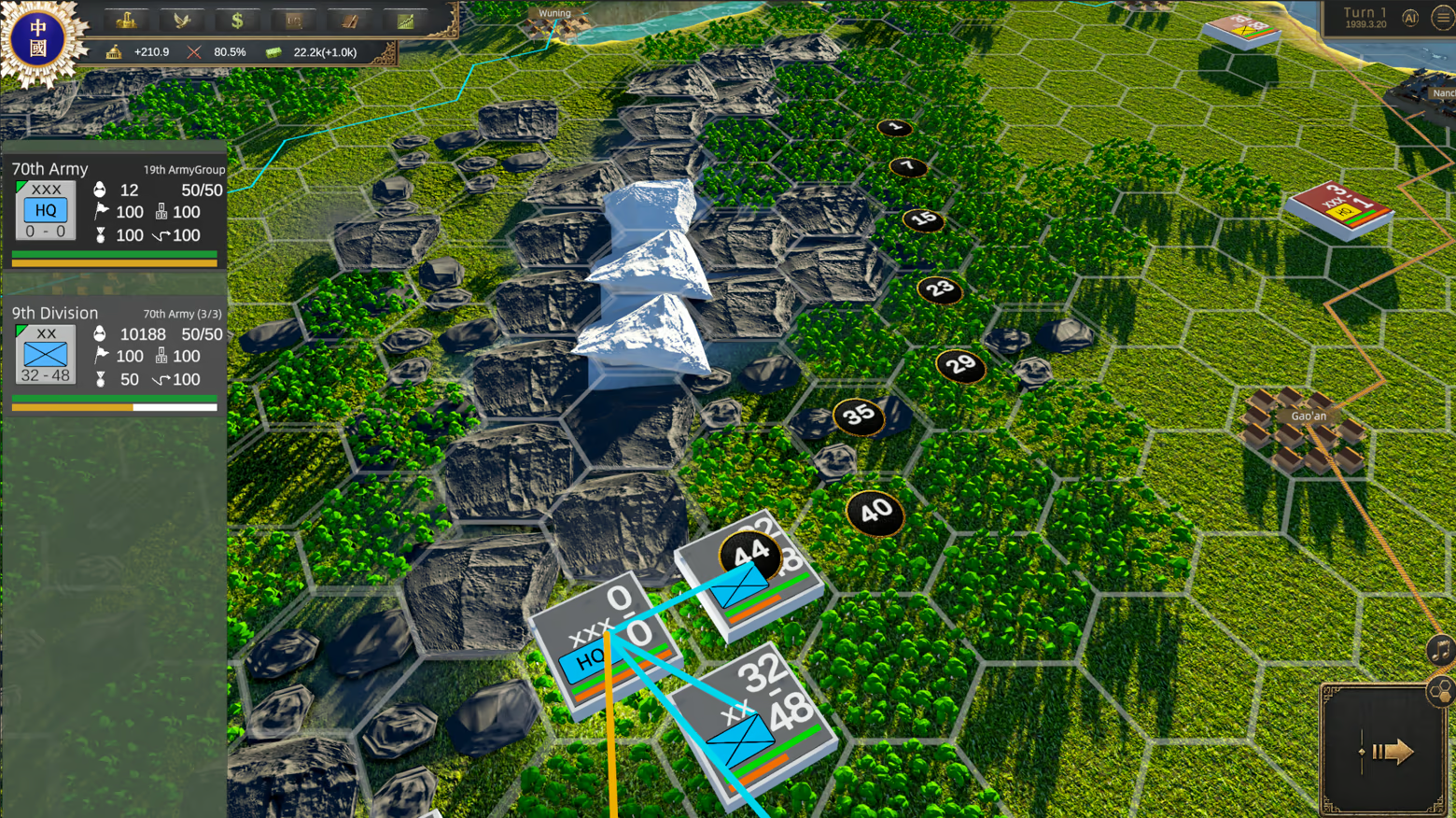
Through the chain-of-command system, you will take control of the entire Chinese front, appoint your commanders, and organize large-scale campaigns. Campaigns are dynamic operations that unfold over days or even weeks. Every breakthrough and delay along the front can reshape the wider strategic situation.
A unit’s combat effectiveness depends heavily on its condition. Disrupted supply lines, or reckless prolonged high-intensity operations, can rapidly weaken or even collapse your forces.
Units do not appear out of thin air. You may organize new formations based on historical orders of battle or custom formation templates. At the same time, each nation’s industrial and equipment capacity will limit what kinds of formations are realistically viable. Train and equip new units in any region, and assign them the designations you prefer.
Map and Cities
Thanks to a script-driven map editor, War in Asia features more than 300,000 tiles. On one of the most faithful strategic maps of East Asia, you will be able to command all of your forces.
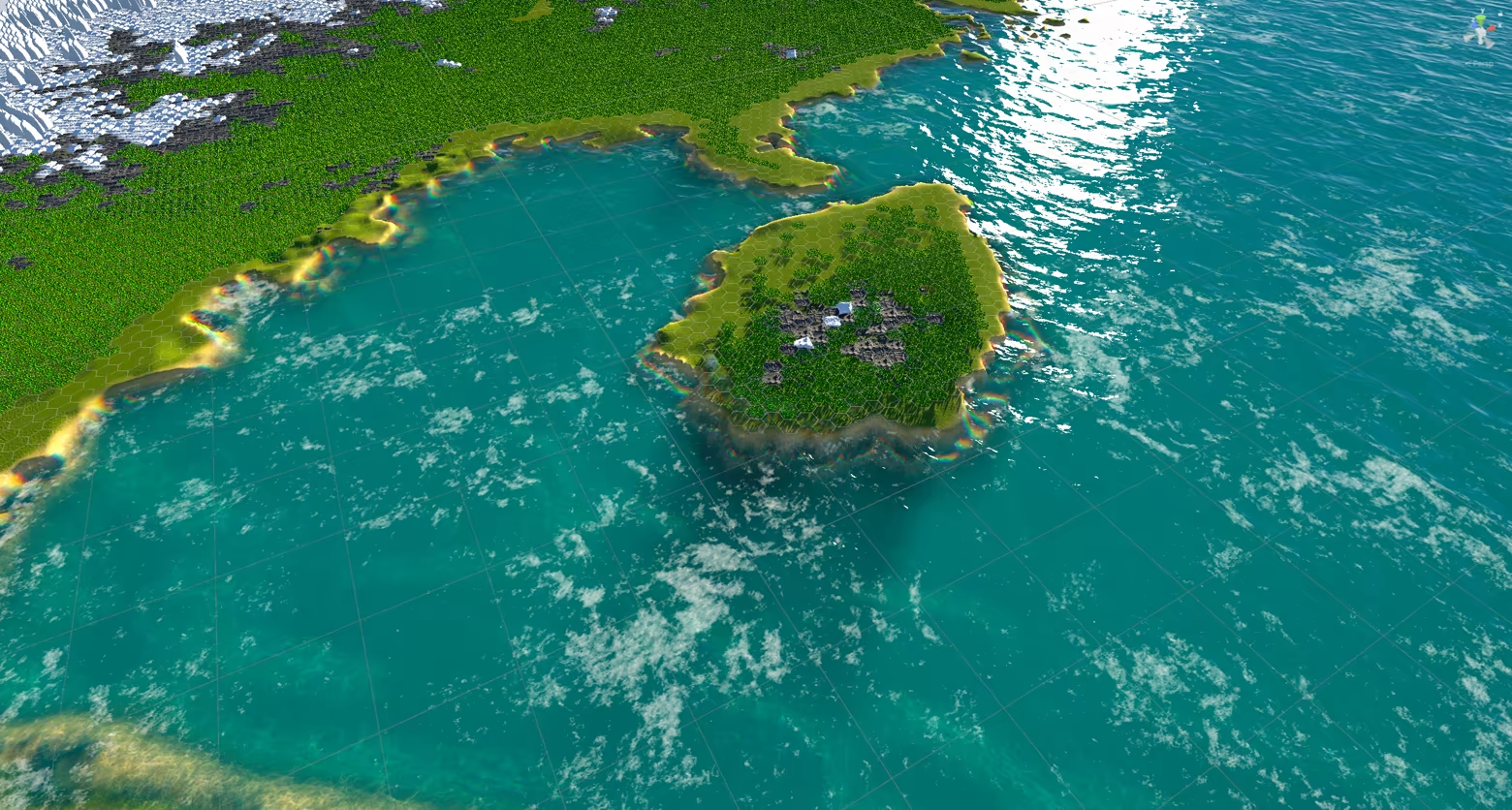
As in the real East Asian theater of World War II, major cities and transportation lines form the core of the game map. Seize and suppress key strategic and resource nodes to secure victory in the war.
Economy and Production
Resources in the game have sources, processing chains, and distribution paths. You must manage your resources by producing basic materials through city buildings, transporting them through the transportation network, and processing them into weapons and equipment that can be delivered to the front.
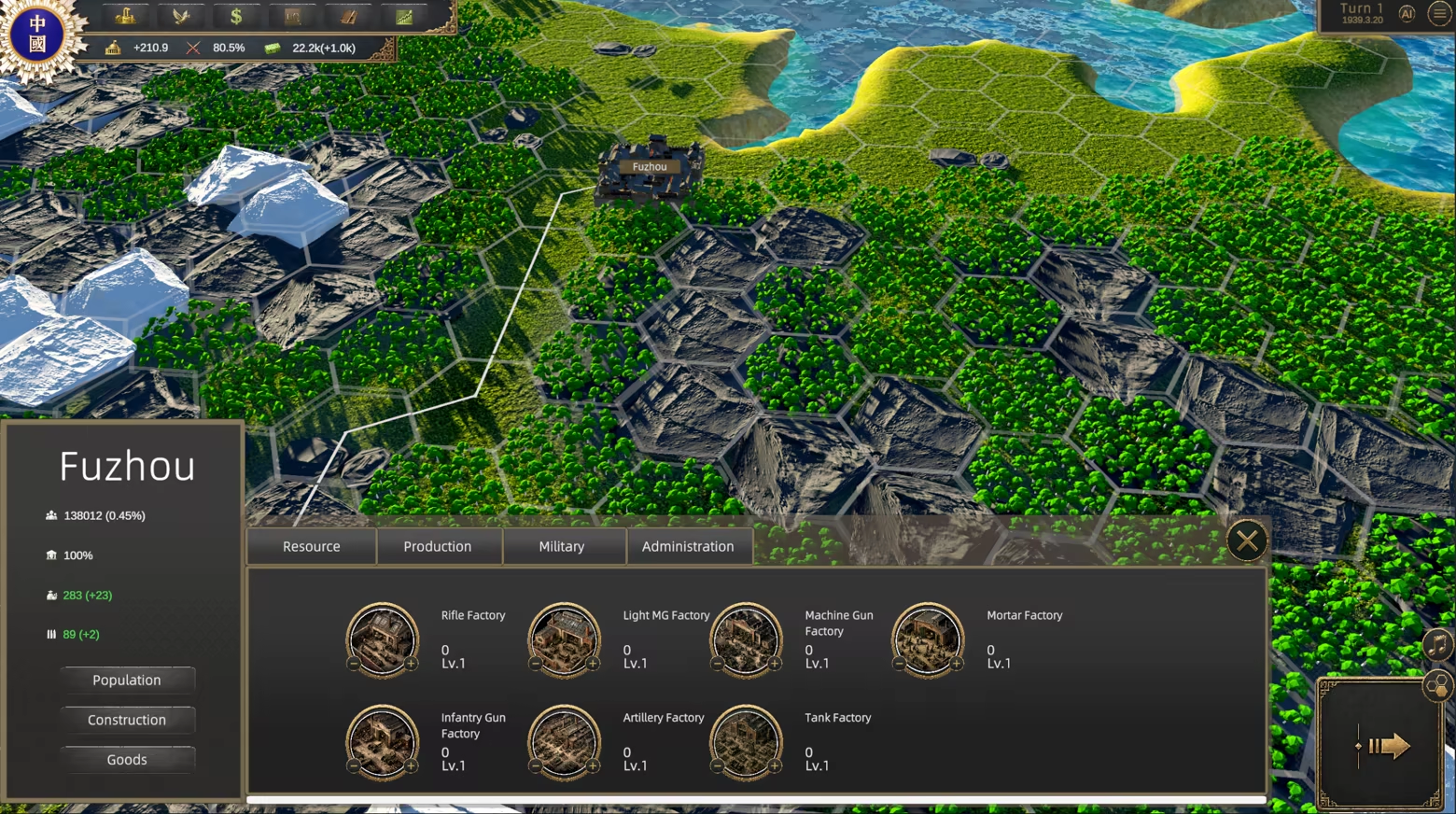
The transportation network is a vital part of the game. Goods can only be moved between cities through the transportation network you build and control.
Logistics and Transportation
Your frontline capabilities depend on sustained supply. You may decide to concentrate resources in Wuhan to support the Central China front. This may increase local industrial output, but it could also create shortages in other regions.
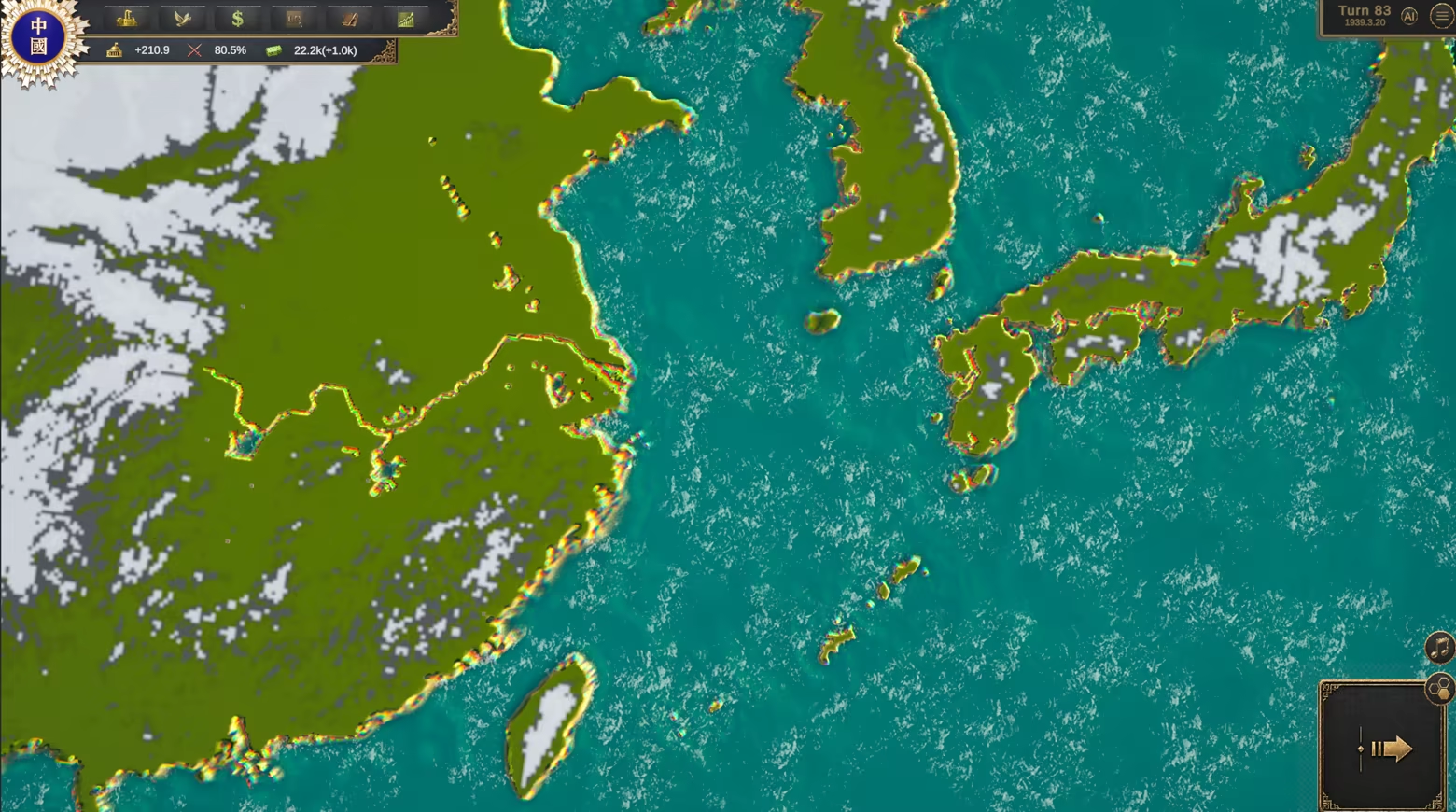
You may choose to launch an offensive, but if your supply preparations are insufficient, the operation may stall on its own during the advance.
Each military unit receives supplies from a designated city. When that city’s stockpiles are depleted, or when the roads connecting the unit to its supply source are cut, the unit will no longer be able to properly replenish personnel or recover its condition.
Politics and Organization
The game features a unique character system. Assign your characters as frontline commanders or bureaucrats within the government, and allocate tasks according to their different talents.
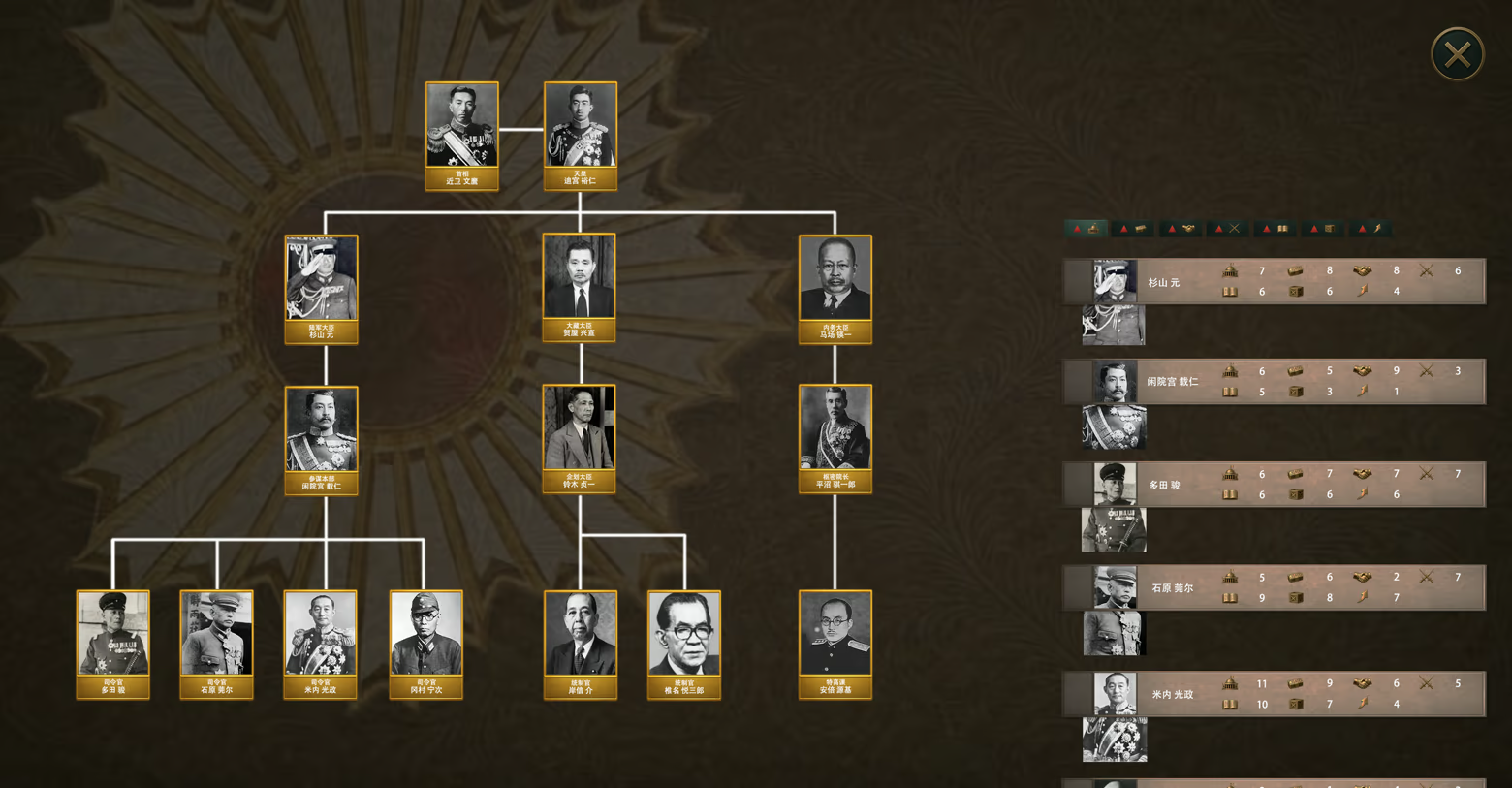
Characters are an important element in keeping your nation running. Choosing the right people for the right positions can bring major advantages.
International Diplomacy
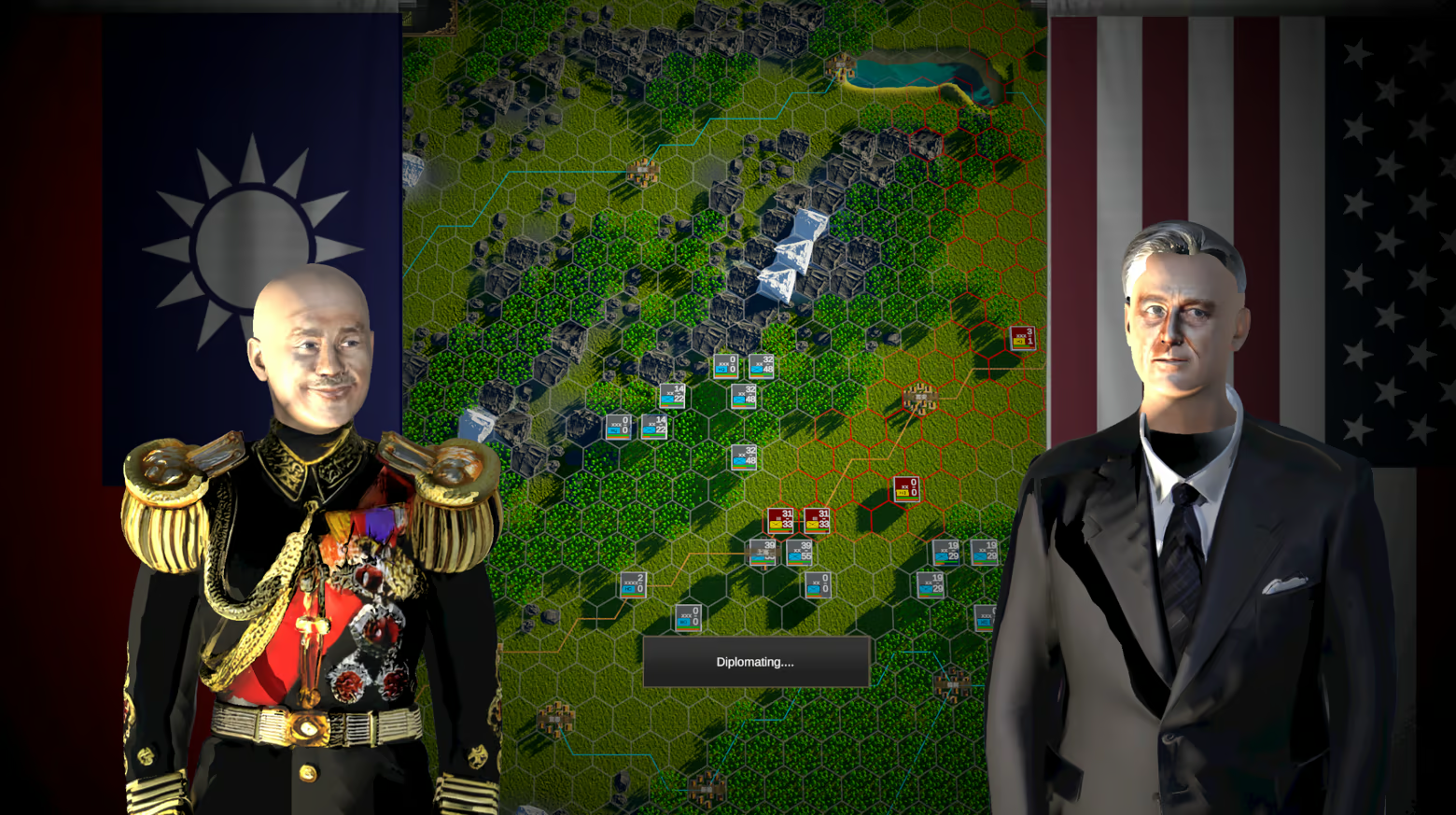
World War II was a global conflict. As a result, the international situation and changes in other countries’ attitudes toward you will directly affect the battlefield.
Poor diplomacy will create more difficulties for you, while a strong international image can bring meaningful benefits.
You can engage in a wide range of international interactions, leading to different outcomes.
System Requirements
Will my PC run this? →Minimum
- Requires a 64-bit processor and operating system
- OS: Windows® 10 Home 64 bit
- Processor: Intel i5-8400
- Memory: 8 GB RAM
- Graphics: NVIDIA GTX 1060 / AMD RX 580
- Storage: 15 GB available space
Recommended
- Requires a 64-bit processor and operating system
- OS: Windows® 10 Home 64 bit or Windows® 11
- Processor: Intel i7-9700
- Memory: 16 GB RAM
- Graphics: NVIDIA RTX 2060 / RX 6600
- Storage: 20 GB available space
Supported Languages
*languages with full audio support
Latest news
AnnouncementsOfficial
【Developement Thread 8】Supplies & Logistics
Units in the game will gradually consume supplies, morale, and readiness while moving and engaging in sustained combat. A shortage of supplies will not only limit a unit’s ability to continue operating, but will also directly reduce its actual combat effectiveness. To maintain an offensive, players will need to establish a stable logistics network.Friendly cities form the backbone of the supply system. Cities transport food, ammunition, weapons, and other equipment to the front through transportation routes.Each army-level headquarters is assigned a supply source city. During each turn’s supply phase, subordinate units will attempt to obtain missing equipment required by their formations from the headquarters’ supply source, while also requesting food and ammunition to restore their condition.You can manually change an army headquarters’ supply source city or allow the AI to assign one automatically. As long as a unit can connect to a valid supply route, it can recover a certain proportion of its supply, morale, and readiness based on its distance from the supply line. The closer it is to the transportation network, the more efficient this recovery will be. In the unit panel, players can view the unit’s current supply source, supply mode, and the actual amount of supplies received during the current turn.Understrength units will prioritize better equipment when receiving replacements. For example, the 30th Division shown here lost seven rifle squads in combat. We can see that its parent formation, the 30th Army, is supplied from Taiyuan. Taiyuan will automatically search its available stockpiles. If there are not enough Chiang Kai-shek rifles available, it will instead send Hanyang 88 rifles to the division. You can also view the resulting frontline demand for goods in the city inventory interface.Supply routes are not completely secure. Enemy zones of control can sever transportation lines, while units operating too far away may find themselves beyond supply range ...Read full article on Community Announcements (家乐福单推人)AnnouncementsOfficial
【Developement Thread 7】Lines of Transportation
Transportation lines are one of the most important elements in the game, serving as the links that connect cities with one another and with the front lines.Unlike most strategy games and wargames, we aim to represent historical transportation networks through a more concrete and hands-on system. You can precisely manage the traffic on each transportation line, as well as the flow of individual goods along those routes, allowing resources to move between different cities. Weapons, food, and ammunition can be continuously supplied to the front, while vital raw materials and industrial goods can be transported back toward the interior.A frontline city often faces enormous supply demands and must rely on transportation lines connecting it to cities in the rear. However, if you have stockpiled enough supplies in advance, units around the city can continue operating for a long time even after all of its transportation links have been cut.This also encourages more flexible operational planning. Severing a transportation line that enemy forces depend on may not produce an immediate result, but its long-term impact can be decisive.To achieve this without forcing the player into excessive micromanagement, the game introduces a Priority system. In the stockpile interface, you can freely raise or lower the priority of any particular good. Cities with a high priority for a certain resource will receive supplies from other cities, while goods stored in lower-priority cities may be shipped elsewhere.If you still find manual management too cumbersome, you can delegate transportation management to the AI. Each turn, the AI will automatically allocate available transport capacity, taking shortages and frontline demand into account while ensuring that city production can continue, and then distributing supplies to the areas where they are needed most.Every unit of goods has a specific weight, which, together with the capacity of a transportation line, determines how much of that good ...Read full article on Community Announcements (家乐福单推人)AnnouncementsOfficial
【Developement Thread 6】Resolving a Battle
Welcome to Development Thread 6!In this entry, we will discuss how battles are resolved.When the player orders one or more units to attack, an engagement begins. Combat is generally divided into two phases: the approach phase and the assault phase.During the approach phase, the attackers advance toward the defenders’ positions while both sides exchange fire. During the assault phase, close-combat calculations determine whether the defenders hold their ground, retreat, or are destroyed.The outcome of an engagement is largely determined by the squad-level equipment of the participating units. A unit with sufficient artillery will possess greater long-range firepower, while tanks provide powerful armour and breakthrough values. Heavy machine guns significantly strengthen positional defence. Factors such as entrenchment and readiness also play an important role.However, artillery and armoured units that lack enough frontline infantry will suffer heavy losses due to insufficient resilience. Maintaining a balanced and sensible ratio of squad types within your formations is therefore essential.After the battle, you will be able to review the order of battle, the result, and the equipment losses suffered by both sides.In this example, two divisions were committed to an attack and successfully advanced, while the 216th Regiment was forced to retreat and lost its original position.Read full article on Community Announcements (家乐福单推人)AnnouncementsOfficial
【Developement Thread 5】Maneuver
Each combat unit performs two types of actions during a turn: movement and combat. Both consume Movement Points (MP).Every unit has a limited amount of Movement Points each turn. A unit's available MP is determined by its weight, current condition, and the amount of mobility equipment it possesses, such as horses and trucks. Movement Points are gradually consumed as the unit moves across the map. You can always check a unit's remaining MP in its information panel.Marching also reduces a unit's condition, including morale, supply, and readiness. Although these values will recover when the unit is properly supplied, you must always consider whether your logistics can sustain an aggressive advance before committing to it.Different terrain types require different amounts of Movement Points. Moving across plains is relatively efficient, while mountainous terrain is considerably more demanding. Entering an enemy Zone of Control doubles the Movement Point cost, making deep advances increasingly difficult. For mechanized formations, rough terrain is particularly inefficient and should be avoided whenever possible.A detailed movement system allows the game to accurately simulate the culminating point of an offensive. A smaller but well-prepared force can defeat an exhausted enemy that has advanced too far, marched too long, and suffered severe losses in readiness.Read full article on Community Announcements (家乐福单推人)AnnouncementsOfficial
【Developement Thread 4】Stockpile & Production Chains
Welcome to Development Log 4!The game places strong emphasis on the concept of “production chains,” as they realistically reflect how a nation’s economic and wartime industrial foundations shape the eventual course of a war.In a city’s inventory panel, you can view the stockpiles of all products, their current trends, and the ways in which they are produced.Generally speaking, products further downstream in the production chain require more complex combinations of materials. Artillery production, for example, consumes tungsten, tools, and steel, while the production of those materials in turn depends on iron ore extraction.As you can see, expanding the consumer goods factory has created shortages in both tools and textiles. A larger consumer goods industry consumes more of these products. However, when you attempt to resolve the shortage by expanding tool production, the city’s iron ore stockpile begins to decline. This is why prioritising basic industries is encouraged.Because stockpiles act as a buffer, a production deficit may not cause factories to stop operating immediately. However, you must resolve the shortage before the reserves are exhausted. Alternatively, you can transport the required products from other cities, or ship the final products directly to wherever they are needed.Transportation and logistics will be explained in greater detail in a future development log.Read full article on Community Announcements (家乐福单推人)


