

Screenshots

 Watch trailer on Steam ↗
Cinematic Business
AW Rook · Published by AW Rook
Last updated 5 Sept 2026
Run your own movie studio in a detailed film industry simulation. Hire actors and directors, greenlight productions, build marketing campaigns, compete for awards, and battle for box office dominance in the ruthless world of cinema.
Indie, Simulation, Strategy, Early Access, Casual · More free games
About this game
Cinematic Business is a deep film-industry management simulator. You run a production studio as both producer and CEO — every screenplay, every casting decision, every release date is yours to make. There are no shortcuts and no "right" answer: you read the talent, you read the market, and you live with the result on opening weekend.
The simulation tracks each creator as a person with a career, not a stat block. Writers grow stronger after every project. Directors form opinions about you. Actors collect filmographies the press will remember. Rival studios run their own pipelines on the same rules you do, with their own strategic profiles, budgets, and ambitions. The industry keeps moving whether you ship a film this year or not.
Develop the Screenplay
You're the producer — you don't write the script, you commission it. Brief your writers on genre, setting, period, themes, tone balance and role structure, then pick one or two screenwriters from your own studio or the open market. Their talent, speed, reliability and genre fit shape what the script becomes.
As the draft develops, watch it take shape across every quality dimension — its core idea, structure, characters, style, logic, worldbuilding and tone control. Not happy with where it's heading? Order corrections, swap the writing team mid-project, or shelve the draft and start over.
You commission the script and watch it take shape across every quality dimension — from core idea to tone control.
Assemble the Crew
Run a director kickoff to lock the creative brief, then attach a director by direct pick, shortlist, or open search. Negotiate creative freedom, scenario rights, casting influence, and pace. Cast leads, supporting roles, and minor parts through shortlists, open casting, or director-led picks. Assign a camera operator and lock down shooting locations and stages before the preparation deadline runs out.
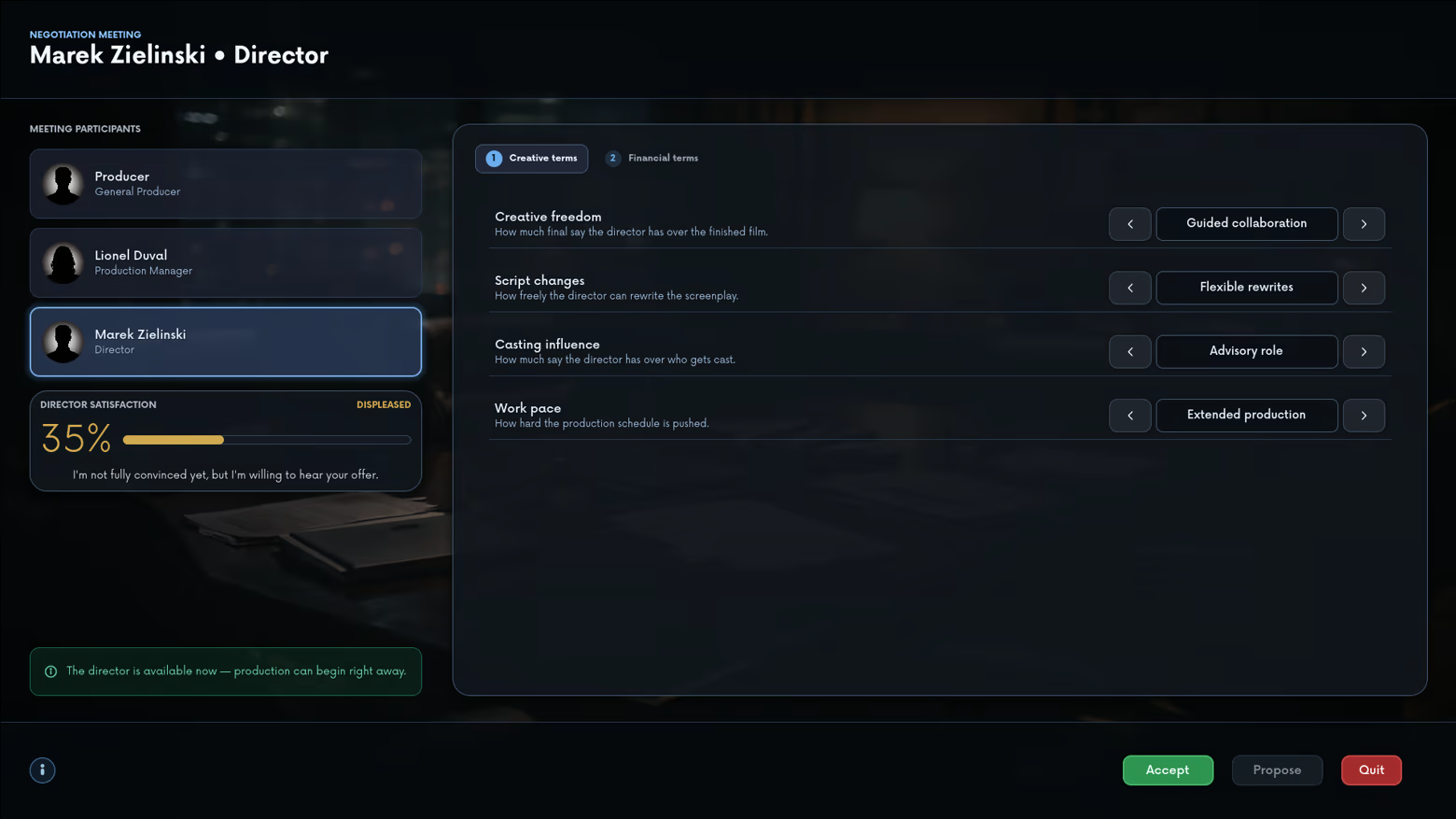
You negotiate creative freedom, scenario rights and pace with your director — a creator isn't a stat block you buy off a shelf.
Run the Production
Preproduction, shooting, and postproduction each carry their own decisions, costs, and risks. You set the pace and tone of the shoot, then plan the postproduction: picture editing, sound, music, VFX, and animation — choosing between in-house capacity, outsourced postproduction houses, or premium music options from library tracks to original scores to star composers. Every choice feeds into a ten-category quality score that decides how the film actually plays.
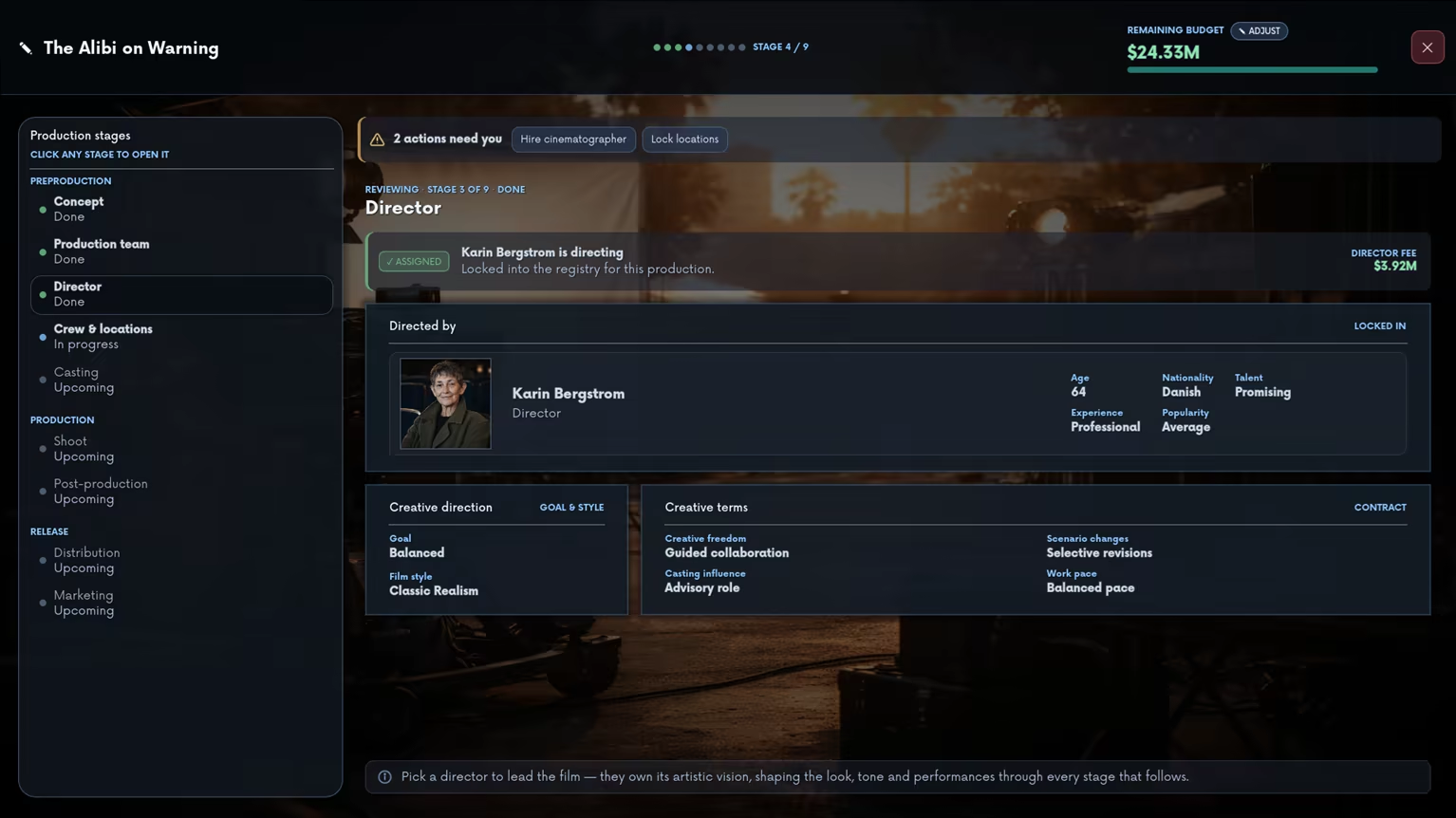
Your production command center: every stage, the budget, and each decision in one place.
Compete in a Living Industry
AI studios run the full pipeline alongside you, driven by procedural strategic profiles: commercial focus, expansion aggressiveness, producer control, long-term strategy, market reactivity, and financial status. They greenlight projects, hire crews, and release films in the same world you operate in. The press covers everything — start announcements, reviews, director picks, breakout hits, year-end top lists. Festivals run on a real calendar with nominations, juries, and prestige weights.
Release and Results
Sign distribution contracts, build marketing campaigns with hype tracking across stages, and pick a release date that gives postproduction and marketing room to land. Premiere day converts the entire production chain into reviews, audience numbers, and box office — weekly, by year, and all-time. Strong films collect festival nominations and awards that follow the creators who made them.
Build Your Studio
Expand stages, postproduction rooms, casting offices, and development capacity. Hire permanent writers and production managers, build production teams, and grow your reputation across regions. Decisions you make in year one shape the talent willing to work with you in year ten.
Features
Full film pipeline from screenplay brief to box office and festival results
Deep creator simulation — writers, directors, actors, operators, and production managers with statistics, careers, and project histories
SI rival studios with distinct strategic profiles
Press ecosystem with reviews, news coverage, and year-end coverage
Festival calendar with nominations, awards, and prestige rules
Box office tracking — weekly, yearly, all-time, by region
Modular creator sets — the game ships with a default set, with more sets and community-friendly JSON authoring planned
Difficulty modes and three career starting points: Startup, Professional, Hollywood
Early Access
Cinematic Business is launching in Early Access. The full pipeline — from screenplay to release, including AI competitors, press, and festivals — is playable today. Early Access is where we tune balance, expand creator content, add scenarios, and shape the simulation around player feedback. Details about our plans and the current state of the game will be published regularly on Steam. We encourage you to add this project to your wishlist so you can follow our progress.
System Requirements
Will my PC run this? →Minimum
- OS: Windows 10® (64-bit)
- Processor: Intel Core i3-6100 / AMD Ryzen 3 1200 or equivalent
- Memory: 4 GB RAM
- Graphics: Integrated GPU with OpenGL 3.3 / Vulkan support (Intel HD 4000 or newer)
- DirectX: Version 11
- Storage: 4 GB available space
- Sound Card: Any DirectX-compatible
- Additional Notes: 1080p display recommended
Recommended
- OS: Windows 10/11® (64-bit)
- Processor: Intel Core i5-8400 / AMD Ryzen 5 2600 or equivalent
- Memory: 8 GB RAM
- Graphics: Dedicated GPU with 2 GB VRAM (NVIDIA GTX 1050 / AMD RX 560 or newer)
- DirectX: Version 11
- Storage: 4 GB available space
- Sound Card: Any DirectX-compatible
- Additional Notes: 1080p or higher display
Supported Languages
*languages with full audio support
Latest news
AnnouncementsOfficial
From Script to Box Office: First Gameplay Overview
Our first gameplay overview for Cinematic Business is now live. Follow one film through the studio—from selecting a screenplay and assembling its cast and crew to production, marketing, reviews, festivals, and box-office results.See how a film comes togetherEvery project begins with a choice: which screenplay is worth producing? Assemble the cast and crew, move into production, plan the marketing campaign, and see how the finished film performs at the box office, with critics, and at festivals.This trailer shows the game in development. Some interface elements, values, and game balance may change before release.What should we show next?Which part of Cinematic Business would you like to see in more detail: screenplays, casting and crew, production, marketing, reviews, festivals, or box office? Share your pick in the comments.If Cinematic Business looks like your kind of management game, add it to your Steam wishlist and follow the game for future development updates.Read full article on Community Announcements (awydra1993)AnnouncementsOfficial
Building a film, one hire at a time
You've got a script. You've got a budget. But a film doesn't come from a good idea and money — it comes from people. Before the first take on set, you have to assemble the whole production: the crew, the director, the cinematographer, the locations and the cast. Every one of those choices carries weight, and together they decide what the film even becomes. This is the road from the start of production to the first day of shooting.The crew that runs the floorYou don't make a film on your own. First you put together a production team and the production manager who'll run the floor day to day. They set the rhythm and the way you work — some push a shoot hard and fast, others play it careful. The team you pick shapes what the coming weeks will feel like.Your production team and PM — the people who keep the shoot on the rails.The director — whose vision this isThen you bring in a director: the person whose taste will shape the entire film, from its tone to the performances. With them you don't just sign a contract — you settle the terms of the partnership: how much creative freedom you hand over, who has a say in the script and the casting, the pace you work at. A director isn't a stat block you buy off a shelf; they're a partner for the whole production.The director and the terms of the deal — settled before anything rolls.The look and the placesThe director says what the film should be; the cinematographer makes it look that way. You pick your director of photography and lock down the locations and stages — they decide where this world plays out and what each day on set costs you.The cinematographer and the locations — how and where the picture takes shape.The faces on screenLast, you cast the roles — from the leads that carry the film down to the bit parts. You fill each one with an actor who fits it (or who pointedly doesn't). These are the faces the audience will remember — and the filmographies these actors will carry into their next projects.The cast — from leads ...Read full article on Community Announcements (awydra1993)AnnouncementsOfficial
Negotiations and choosing your director
Who you're hiring The market is full of directors, each a real profile — talent, experience, creativity, technical skill, how cooperative they are, how famous they are, plus a feel for different genres (drama, action, humour, darkness and more). No two are alike: a veteran auteur with maxed talent but no patience for compromise; a young prodigy with huge talent and zero track record; a solid technician with no vision of their own. You find them three ways — pick directly from the market, request a shortlist, or open a search.They size you up first Before you even sit down, every director judges your project. Interest blends several things: does your goal match their artistic identity, do they rate the script, do they trust a studio your size, and is the budget in their league. A famous director won't take a small studio seriously; an arthouse soul won't light up over a by-the-numbers commercial gig. Their fee scales with fame, film length, your reputation — and my favourite detail — with how good they think the script is. They don't see the real score; they read it through their own talent and experience, with noise. A sharp director prices it accurately. A mediocre one guesses.Half one: creative terms When you sit down, the first half is creative — four levers, each on its own scale:Creative freedom — final say over the finished filmScript changes — how freely they can rewriteCasting influence — say over who gets castWork pace — how hard you push the scheduleEach director expects a certain setting on every lever — set by who they are. Push below it and their satisfaction drops, but not evenly. The more independent the director, the more it stings to deny them creative freedom. A cooperative craftsman shrugs at a tight schedule; an auteur walks over it. Run them out of patience and they counter — or end the meeting.Creative terms — four levers, each on its own scale. Push too hard and the director counters, or walks.Half two: the money The second half is money — and...Read full article on Community Announcements (awydra1993)AnnouncementsOfficial
Welcome to Cinematic Business
Cinematic Business is a movie studio management simulation where you take films from early screenplay briefs to casting, production, marketing, release, reviews, festivals, and box office results.You are not just making movies. You are building a studio, managing risk, developing talent, reading the market, and deciding which projects deserve your money, time, and reputation.In Cinematic Business, you will:- develop screenplay briefs into film projects- hire directors, actors, and production staff- manage budgets, schedules, genres, and audience expectations- run marketing campaigns before release- react to reviews, press coverage, festivals, awards, and box office performance- grow your studio from small productions into a serious industry playerRight now, development is focused on the core production loop: choosing projects, building the right team, managing production decisions, and seeing how those choices affect the final release.The goal is to make each film feel like a business decision with creative risk behind it, not just a number generator.In future updates, I’ll share more about the screenplay system, casting, creator careers, marketing, reviews, rival studios, festivals, and the Early Access roadmap. ⭐ Wishlist Cinematic BusinessIf a deep movie studio management sim sounds like your kind of game, please consider adding Cinematic Business to your Steam wishlist.Wishlisting helps the game reach more players and makes sure you are notified when it becomes available.Visit the Steam Store PageRead full article on Community Announcements (awydra1993)


