

Screenshots

 Watch trailer on Steam ↗
商道逐权 Pursuit of Mercantile Power
秘枫 · Published by 秘枫
Last updated 28 Sept 2026
Pursuit of Mercantile Power is a single-player economic sim with light RPG. No money spawns—money only moves. Control the village’s cash flow, use proposals and loans, buy shares, and take over enterprises to seize GuYuan’s commercial order.
Indie, RPG, Simulation, Strategy, Early Access · 2026 · More free games
Navigate the complex economy of GuYuan as you manage cash flow, negotiate loans, and expand your influence through strategic investments.
About this game
Pursuit of Mercantile Power is a game where you can leverage the entire village’s cash flow to buy out the whole village.No money spawns. Control the village’s cash flow, buy shares, and take over the village.
You begin as an ordinary commoner—making your start through escort missions—then move on to join the Commerce Guild, submit proposals to the Bank, expand farmland, and even take office in the Government.
Tax rates, wages, food, and population movement all affect one another, causing the village’s cash flow to rise and fall accordingly.
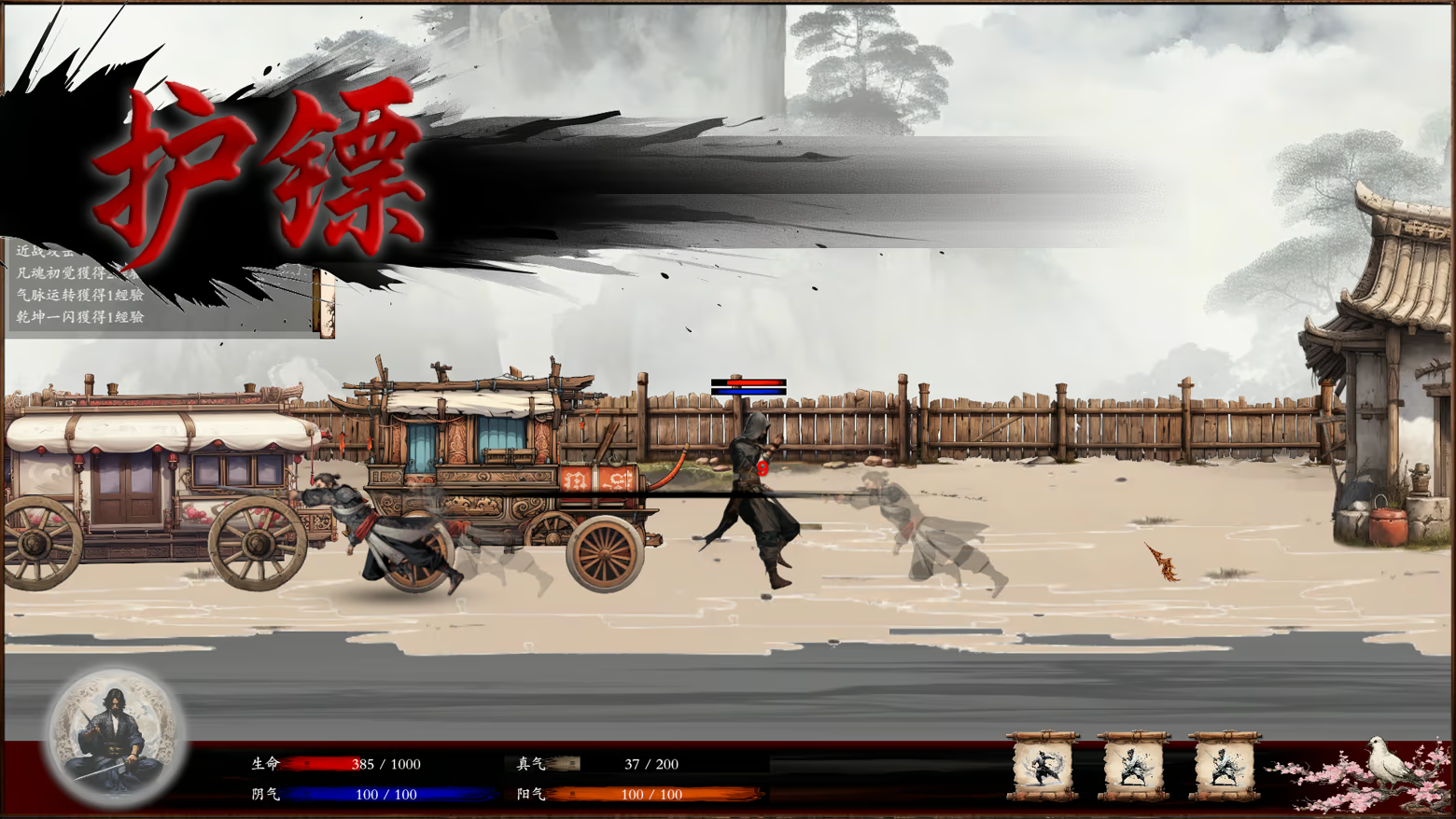
Escort Combat — Build Your Strength
The Escort Agency is your starting point. By running escort missions, you improve combat ability and build wealth.
Upgrade the agency to unlock better missions, and build stronger escort carts to meet mission requirements.
Train more powerful martial arts, gather materials, and craft stronger equipment to protect your cart against enemies along the route.
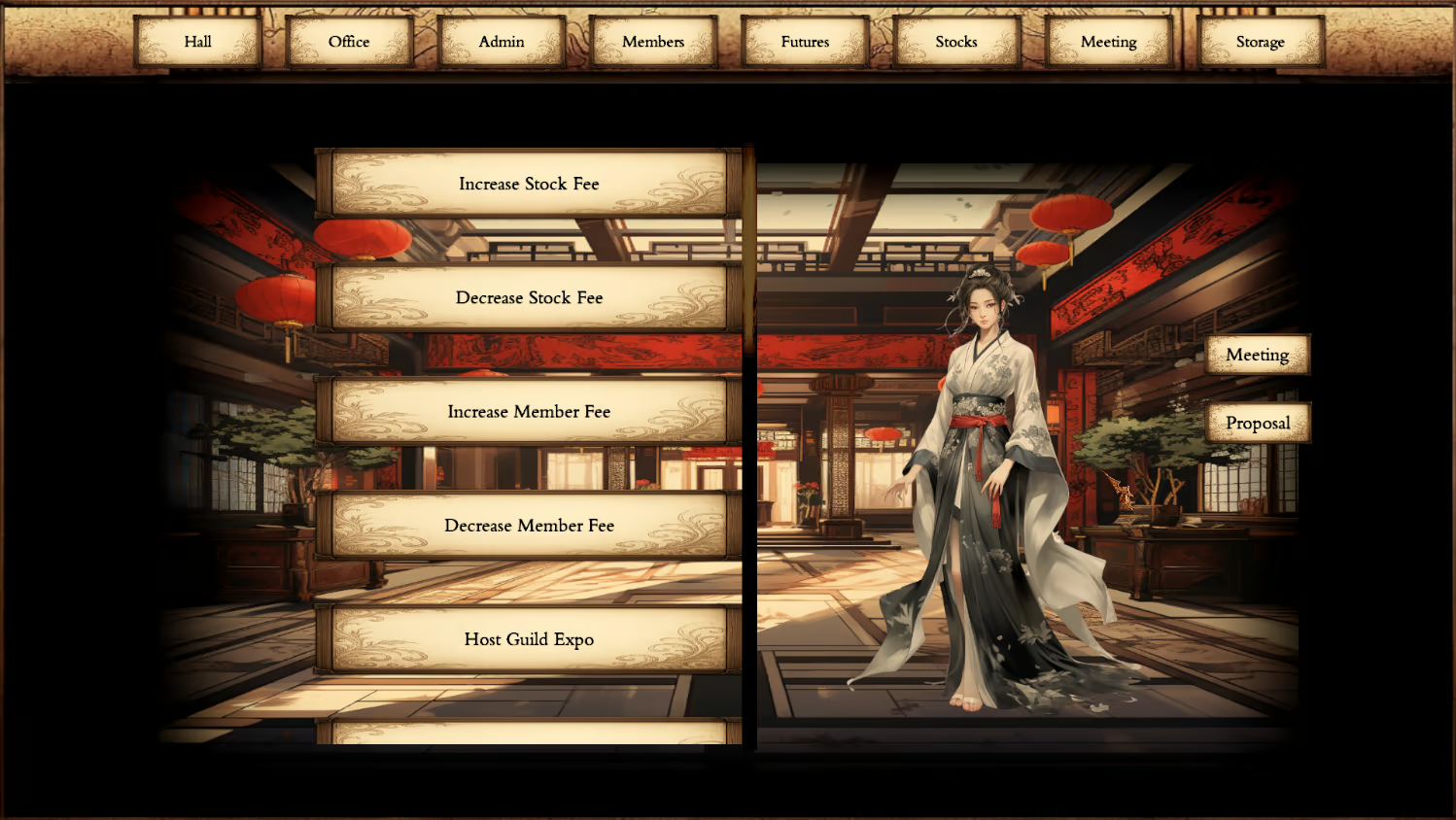
Proposals — Change the Rules
Proposals are the most important feature in the game. By submitting proposals, you can influence how enterprises operate, which in turn changes where the village’s money flows.
Whether you’re helping an enterprise grow, or pushing proposals that benefit your own hostile takeover, your choices will shape the village’s future.
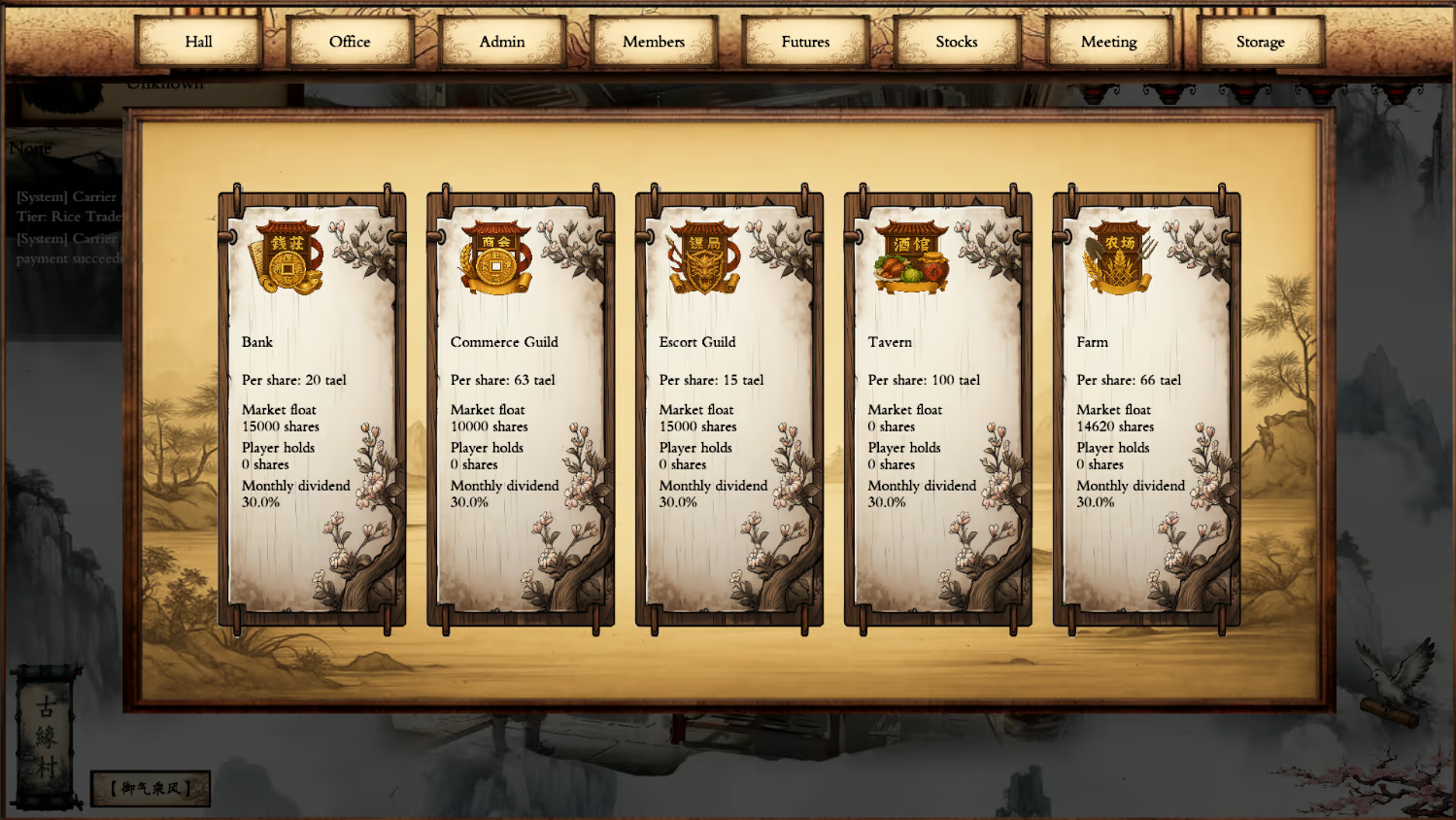
Share Warfare — Hostile Takeovers
The Commerce Guild is the trading hub for all share dealings. By joining it, you can acquire shares in other enterprises and secure final decision-making power.
The village’s cash flow directly affects whether your shares can be sold. One wrong move can leave you with valuable shares—but no buyers.
To trade smoothly, you must ensure cash flows into the market’s stock liquidity pool.
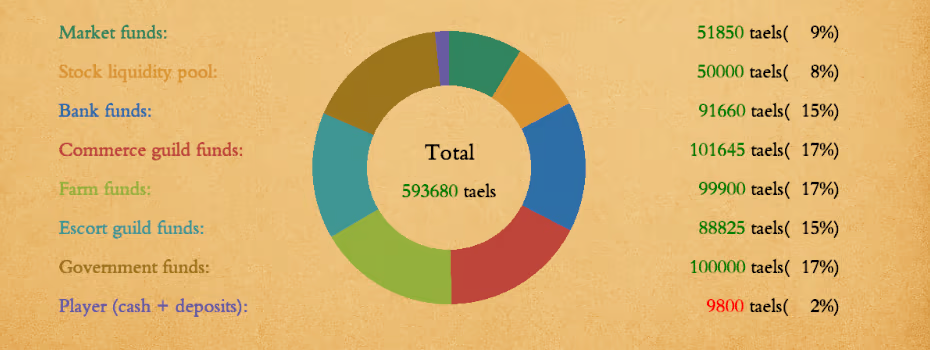
Cash Flow — How Do You Allocate It?
Cash flow in the village doesn’t appear out of nowhere. The key is how you influence how money circulates and gets distributed.
Do you keep cash in your own hands to grow personal wealth?
Do you direct limited funds into enterprises to develop the village?
Or do you convert cash into shares to obtain ultimate power?
It all depends on your proposals—or the decisions you make after taking control.
Mismanagement — A Curse in Disguise
The Commerce Guild influences village prosperity. Livelihood goods and grain stockpiles indirectly or directly reshape how cash flow is distributed.
The Bank absorbs villagers’ deposits and lends to you or other villagers, increasing the village’s total circulating capital. But poor management can trigger a liquidity crisis and bankruptcy—dividends stop entirely, and both you and the villagers may lose all deposits.
The Farm is the village’s core: food equals population. No food means no people, and the village collapses on its own.
The Government handles land allocation, public security, housing development, and more. If the Government goes bankrupt, the game ends.
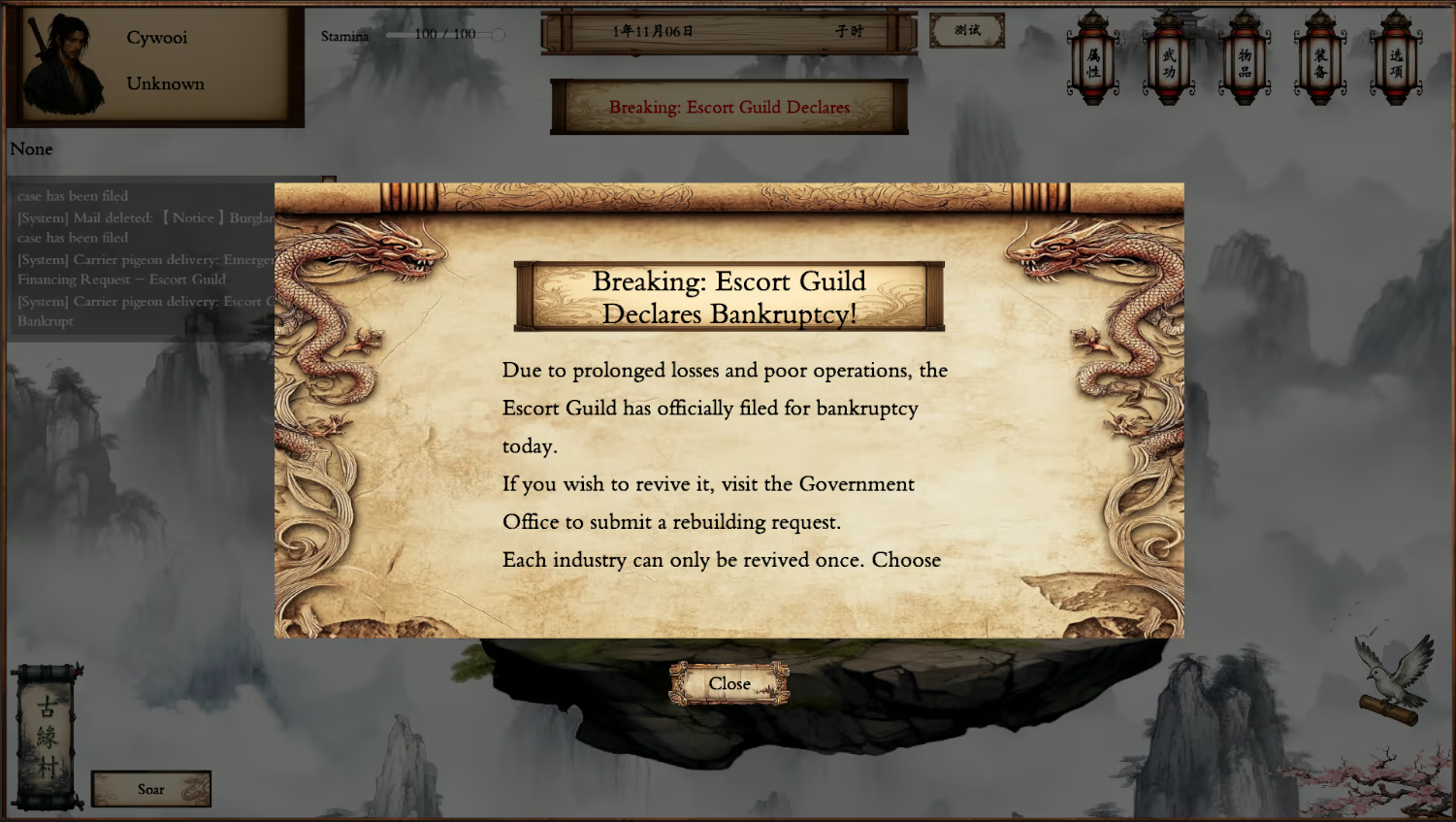
Any enterprise can go bankrupt due to mismanagement, sending the village down a road toward ruin.
Rebirth — Seize Absolute Power
After bankruptcy, if you still have the means, you can go to the Government to restart—but each functional enterprise can only be revived once.
Every enterprise is essential. The bankruptcy of even one will disrupt the village’s entire cash-flow loop.
If the Government goes bankrupt too, it’s game over.
Early on, you steer each enterprise manager’s decisions through proposals. Once you’ve built enough wealth and power, you’ll use loans to draw the village’s cash flow into your own hands—then acquire the enterprise to gain the final say over its direction, the village’s money distribution, and ultimately everything.
In the end, the village’s financial system is stabilized—and expanded—through Escort Agency capital injection, Commerce Guild trade, Bank lending, story encounters, industry expansion, and share-based power struggles. Your goal is to secure the financial chain, expand your sphere of influence, and ultimately take control of GuYuan Village’s commercial order.
System Requirements
Will my PC run this? →Minimum
- OS: Windows 10 64-bit
- Processor: Intel Core i3-6100 或 AMD FX-6300
- Memory: 4 GB RAM
- Graphics: Intel HD 4600 / UHD 620 或 NVIDIA GTX 750 Ti / AMD R7 260X(2GB VRAM)
- DirectX: Version 11
- Storage: 2 GB available space
- Sound Card: 兼容 DirectX 的内建音效
Recommended
- OS: Windows 10/11 64-bit
- Processor: Intel Core i5-8400 或 AMD Ryzen 5 1600
- Memory: 8 GB RAM
- Graphics: NVIDIA GTX 1650 / AMD RX 570(4GB VRAM)
- DirectX: Version 11
- Storage: 4 GB available space
- Sound Card: 兼容 DirectX 的内建音效
Supported Languages
Latest news
AnnouncementsOfficial
《Pursuit of Mercantile Power》Devlog #7: Demo GamePlay!!
Pursuit of Mercantile PowerSet in an ancient-style village, the game blends escort-mission combat with multi-institution management—forcing you to choose between “making money” and “seizing power.”You can join the Escort Guild to take missions, gather resources, craft equipment, and steadily grow your combat strength.Or you can enter the Commerce Guild to trade shares, compete for ownership, and influence an enterprise’s fate through stock price swings. Because the demo currently has limited buildings available, it only supports a unique semi-closed-loop village economy for now: money circulates among villagers, the government, the bank, the commerce guild, and other institutions. The Early Access version will deliver a fully closed-loop economy.Stock prices are influenced by an enterprise’s total assets and overall Prosperity—so you can play it safe with steady management, or attempt high-risk hostile takeovers.The demo includes basic tutorials and a quick guide to help you learn escort missions and trading faster.The Early Access version will unlock more buildings and systems, expanding depth and strategic choices.Visit the Steam page to download the demo, and send us your feedback and questions.You’re also welcome to leave a comment in the Steam discussions—let’s make GuYuan Village better together.Demo GameplayBased on the buildings currently available, you can try the following playstyles.Hostile Takeover GameplayTake out a loan at the bank (the limit is about 50,000).Join the Escort Guild and start escort missions. Intentionally fail missions so the guild must pay compensation, while the player only loses the deposit.As the guild starts losing money, its total assets drop rapidly and the stock price falls accordingly.Wait until the stock price drops to around 1–5, then begin buying.Buy a large amount in one go; otherwise, as tradable shares shrink, the price will rebound.51% ownership lets you freely operate the Escort Guild; 100% ownership is required to use ...Read full article on Community Announcements (秘枫)AnnouncementsOfficial
《商道逐权 Pursuit of Mercantile Power》 Devlog #6: Yin–Yang Martial Arts
Hi everyone~ In the previous post, we covered how the equipment system works. Today, let’s talk about the Martial Arts system in Pursuit of Mercantile Power.Martial Arts are divided into three schools: Yin-Yang, Yin, and Yang. Simple enough, right? ~Each school has nine tiers to break through. Every time you突破 (break through) a tier, you unlock the martial art technique or passive skill tied to that tier.On top of that, each tier has its own level that can be upgraded. And yes—levels can even affect the skill’s attack coefficient, so martial arts are a big deal.Also, combat in Pursuit of Mercantile Power is real-time action combat. You’ll fight in many different situations, including escort missions, bounty hunts, village defense, and bandit campaigns.Qi Stance SwitchingOn the battlefield, you can freely switch your Qi stance anytime, anywhere. However, there is a very short cooldown after each switch.As long as you switch into a stance, you can use the martial arts of that school— and at the same time, you can recover Qi for the other schools.Yin-Yang Stance — restores Yin Qi + Yang QiYin Stance — restores Yin-Yang QiYang Stance — restores Yin-Yang QiSo when you’re swapping stances to chain skills, you’ll need to watch whether your next stance has enough Qi— otherwise your combo will break simply because you ran out of the right energy.Martial Arts AwakeningIn this update, the martial arts progression is split into three developable paths, all following a unified structure:Awaken → Tiered Progression → Passive Enhancements → Ultimate FinishYin-Yang Return (阴阳归宗) A Yin-Yang sword style path that starts from “Primordial Balance” (乾坤初现) and progresses tier by tier, eventually unlocking the ultimate: “Myriad Swords Return” (万剑归宗).Nine Yang True Qi (九阳真气) A more power-focused route centered on fists/palms and passive enhancements, reaching the ultimate: “Nine Yang: Returning to Origin” (九阳归元).Nine Yin True Qi (九阴真气) A cold and ruthless blade route that grows tier by tie...Read full article on Community Announcements (easy)AnnouncementsOfficial
Pursuit of Mercantile Power — Devlog #5: Equipment, But Different
Equipment Progression Update This update focuses on equipment progression in GuYuan Village — from forging weapons and armor at the blacksmith, to refining equipment directly onto your character, and then building your power through gems and enchantments.First, let’s clear up the most easily misunderstood rule:Equipment uses “one-time refinement.” Once refined, it binds directly to the player. When you refine a new piece into the same slot, the old one is automatically destroyed.This is not a “inventory management” game. The core of the equipment system is decision-making and progression, not hoarding items.1) Equipment isn’t just “equipping” — it’s refining onto the bodyIn the equipment screen, you can see each gear slot (weapon, gloves, upper body, pants, shoes, ring, accessory, ancient book, etc.). After refinement, the item becomes part of your character — think of it as turning materials and gear into your actual combat structure.✅ Clean, straightforward flow: refine new gear → auto replace → old gear is destroyed ✅ No cluttered inventory full of outdated gear ✅ Every upgrade is a real step forward — not just a cosmetic swap2) Refinement is randomized: you’re not gambling for numbers — you’re gambling for capsGear has levels: higher level means higher attack/defense.But your power doesn’t come from level alone. Refinement can randomly roll key “growth slots,” such as:Bonus Attack / Defense (direct power boost)Max level cap (how far this gear can be upgraded)Max gem slots (how many gems you can socket)Max enchant slots (how many enchantments you can stack)So you’re not just forging “the same sword” repeatedly — you’re forging different destinies. Even the same weapon name can lead to totally different builds depending on what it rolls.3) Blacksmith forging: no materials, no powerYou must gather materials first, then forge at the blacksmith. The forging UI shows required materials and amounts — if you don’t have them, you don’t forge. Simple.And forging isn’t jus...Read full article on Community Announcements (easy)AnnouncementsOfficial
Pursuit of Mercantile Power — Devlog #4: The Farm, GuYuan Village’s Lifeline
Hello everyone—this is a devlog for Pursuit of Mercantile Power (GuYuan Village).In the previous posts, we covered the Escort Agency, the Commerce Guild, and the Bank—systems where the money is obvious and loud. This time, we’re talking about the part that looks the most “simple,” but is actually the most lethal: the Farm, grain, and population.In GuYuan Village, every grain of rice in your bowl was paid for—in real silver—by someone, ahead of time.1) Another Cash Flow: “Grain Flow”Grain in GuYuan Village isn’t conjured out of thin air, and it’s not just “bookkept at month-end.”Each month, the system estimates how much grain the village will consume based on population. Then the first key transaction happens:The Village (community granary) pre-buys a batch of grain from the FarmGrain enters the village granary, while silver moves from the village fund pool into the farm’s fund poolAfter that, the villagers’ daily “eating” is simply consuming granary stockHere’s the problem: estimates can be wrong.If population suddenly increases—or unexpected consumption happens— and the granary runs out before the month ends, what happens?Answer:When the granary is empty, villagers can only turn to the Commerce Guild and buy expensive ready grain out of pocket.And if the Commerce Guild’s stock also runs dry?That’s no longer “price inflation.” That’s:People start going hungrySome residents starve or migrate outPopulation, labor, and tax revenue all drop togetherSo “monthly grain pre-purchase” isn’t a decorative number. It’s the monthly decision that determines whether the village lives calmly— or gambles its survival until month-end.2) The Farm Sells to the Highest Bidder: A Grain Market Is a BattlefieldThe farm is not a charity. It’s a business.It accumulates daily yield, but when it comes to actual sales, it follows one brutally simple rule:Whoever pays more, gets served first.So the monthly price structure works roughly like this:If the Commerce Guild’s buy price > the Village’s ...Read full article on Community Announcements (easy)AnnouncementsOfficial
Pursuit of Mercantile Power - Devlog #3: The Crossroads of the Village’sCashFlow
In Pursuit of Mercantile Power, the Commerce Guild isn’t an item shop, and it’s not just a tiny stall doing “buy low, sell high.” It’s more like the village’s intersection of cash flow, livelihood supplies, and share trading.If the Bank handles deposits and loans, and the Escort Agency handles combat and escort runs, then the Commerce Guild handles the annoying-but-essential stuff: procurement, stockpiling, pricing, dividends, membership fees, and hostile takeovers.This devlog focuses on what the Commerce Guild actually does in the game—and what kinds of trouble you can cause inside it.1) The Commerce Guild’s Role in the VillageIn the setting, the Commerce Guild has three core jobs:A distribution hub for livelihood goods and grainIt buys everyday essentials from other villages and resells them to villagers.It can also buy grain from the farm to buffer food pressure when population spikes.If it sells a lot and sells steadily, market prosperity rises; higher prosperity then affects population inflow and spending power.The broker for share trading and dividendsShares of the village’s major enterprises (Escort Agency, Bank, Farm, and the Commerce Guild itself) all go through the guild.Both the player and NPCs trade shares and receive dividends here. Money flows in and out, and part of it enters the stock liquidity pool, affecting overall market activity.A bellwether for pricing and “inflation”The guild manager sets prices dynamically based on internal “budget prices” (e.g., grain purchase budget, daily goods purchase budget), plus fees and profit margins.How much the guild earns doesn’t just affect the guild—it influences:whether villagers can afford to buy things,enterprise profit margins,and even how difficult or effective your proposals become.Put simply: when the Commerce Guild is in a good mood, village life is easier; when it isn’t, everyone tightens their belt.2) The Guild’s Daily Routine: Buy, Hoard, Sell, Watch the WeatherAt the system level, the guild does sev...Read full article on Community Announcements (easy)


